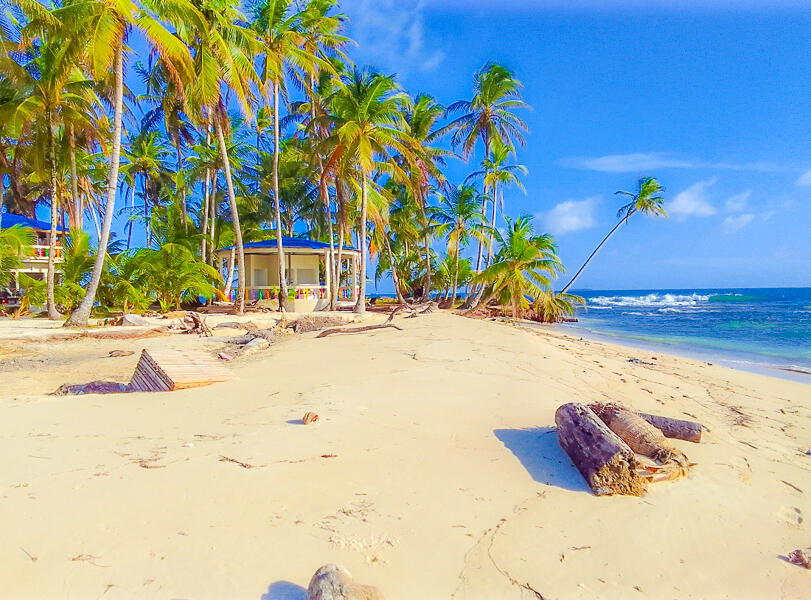
The Cheapest Private Islands for Sale in 2026
Isleta El Coyol in Lake Nicaragua's Isletas de Granada archipelago is currently listed at $74,000 (reduced from $89,000). It's a quarter-acre titled freehold island with a docking area, off-grid solar, and internet, ten minutes by boat from the colonial city of Granada. Foreigners can own it outright. Year-round tropical climate. This is what the bottom of the private island market actually looks like in 2026, and it's wider and more accessible than most articles suggest.
This guide covers every price tier under $1 million with verified real listings as references. Where I've named a specific property, it's because the listing has been confirmed. Where I've described a category, it's because the pattern is verifiable across multiple listings.
 Isletas de Granada, Nicaragua. Hundreds of volcanic lake islands sit ten minutes from a UNESCO colonial city. Some sell for under $100,000.
Two paths to a cheap island
Every "cheap private island" listing falls into one of two categories. Knowing which one you're shopping in matters more than the price tag.
Whole islands you own outright. A complete property surrounded by water on all sides, with title in your name, no neighbors. The cheapest examples are small Canadian lake islands (under $100,000) and small Lake Nicaragua islands in the Isletas de Granada (from $74,000). Tropical sea cays in this category typically start above $200,000.
Lots and parcels on developed islands. Some islands like Isla Solarte and Isla San Cristóbal in Panama's Bocas del Toro have been subdivided over decades. You can buy a titled half-acre lot with waterfront access for $40,000 to $99,000. You don't own the whole island, but you own your parcel free and clear, with neighbors nearby.
Both are legitimate. Both have built businesses, vacation homes, and rental operations. Pick based on what you actually want: total seclusion (whole island) versus accessibility and community (developed island lot).
Under $100,000: real options exist
This is the entry point most articles either miss or get wrong. The tropical options are real but specific.
Whole islands under $100K
| Property | Location | Price | Size | Notes |
|---|---|---|---|---|
| Isleta El Coyol | Isletas de Granada, Nicaragua | $74,000 | 1,224m² (~0.3 acres) | Titled, foreigners can own, off-grid solar, dock |
| Various small lake islands | Nova Scotia, Canada | $50,000 to $95,000 | 1 to 8 acres | Freehold, seasonal use, boat access |
| Ontario lake islets | Canada | $30,000 to $99,000 | 0.5 to 5 acres | Often with cottages |
| Finnish archipelago skerries | Finland | €25,000 to €90,000 | 0.5 to 3 acres | Some with sauna or cabin |
Lots on developed tropical islands
| Property | Location | Price | Size | Notes |
|---|---|---|---|---|
| Isla Solarte titled lot | Bocas del Toro, Panama | $39,000 to $49,000 | ~0.25 to 0.5 acres | Hilltop or waterfront positions |
| Isla San Cristóbal lots | Bocas del Toro, Panama | $75,000 to $99,000 | 0.5 to 0.84 acres | 10 minutes by boat from Bocas Town |
| Mavuva Island lots | Fiji | $75,000 to $125,000 | Lots on a 42-acre island | Leasehold 99 years |
What you should know about each path
The Isletas de Granada are 365 volcanic islands formed thousands of years ago when the Mombacho volcano blew its cone into Lake Nicaragua. They sit minutes from Granada, a UNESCO World Heritage colonial city with restaurants, hospitals, and an international airport an hour away. Foreigners can hold full freehold title, identical to Nicaraguan citizens. The catch: it's a freshwater lake, not the Caribbean Sea. For some buyers that's a feature (calm water, no salt corrosion), for others it's a deal-breaker.
In Bocas del Toro, the cheapest waterfront lots are often sold under Rights of Possession (ROP) rather than titled freehold, particularly in indigenous Comarca regions. ROP is recognized under Panamanian law and used widely by long-term expats, but it works differently than a Western title deed. Fully titled lots in the same area cost slightly more. Always confirm which type you're buying.
Canadian lake islands are typically straightforward freehold but small, and seasonal use only. Use is restricted by climate, not by law.
Browse all listings under $250K
$100,000 to $250,000: the market widens
At this level you find your first turnkey options: Canadian cottage islands you can move into this summer, partial-developed Bocas properties, and the entry point to small Caribbean cays.
What's currently available
| Region | Typical listing | Acreage | Development | Ownership |
|---|---|---|---|---|
| Nova Scotia, Canada | $100K to $220K | 5 to 30 acres | Often with cabin or cottage | Freehold |
| Ontario / Quebec | $120K to $240K | 2 to 15 acres | Many with structures | Freehold |
| Bocas del Toro, Panama | $150K to $250K | 0.8 to 5 acres | Some with structures | Titled or ROP |
| Isla Cristóbal home (Panama) | $165K | 836 sq ft, 2BR/1BA | Move-in ready | Titled |
| Isletas de Granada (larger islands) | $150K to $250K | 1 to 3 acres | Some developed | Freehold |
| Scotland | £120K to £200K | 5 to 30 acres | Varies, some ruins | Freehold |
| Finland | €90K to €200K | 2 to 8 acres | Many with cabins | Freehold |
| Nicaragua (Corn Islands) | $150K to $250K | 0.5 to 2 acres | Undeveloped | Freehold |
| French Polynesia (Tuamotus) | $200K to $250K | 1 to 4 acres | Undeveloped | Freehold with permit |
The two strongest values
A 15-acre Nova Scotia island with an existing 3-bedroom cottage for around $200,000. Existing dock, boat house, freehold ownership. Usable May through October. Twenty minutes from the mainland. Move in this summer with no construction.
A small developed home on Isla Cristóbal in Panama for $165,000. Two bedrooms, full bath, year-round tropical climate, ten-minute boat ride to Bocas Town. The infrastructure exists.
These are different products. The Canadian island gives you space, freehold certainty, and seasonal use. The Panamanian property gives you year-round warmth, town access, and an existing structure. Choose based on how you actually plan to use it.
 A $165,000 home on Isla Cristóbal, Panama. Year-round access, existing infrastructure, ten minutes by boat to a real town.
Browse listings $100K to $250K
$250,000 to $500,000: serious tropical cays
This is where most first-time international island buyers actually shop. Real freehold cays in Belize, larger islands in the Tuamotus, and developed Bocas properties.
What's currently available
| Region | Typical listing | Acreage | Development | Ownership |
|---|---|---|---|---|
| Belize (Turneffe Atoll) | $225K to $400K | 1 to 5 acres | Undeveloped to basic | Freehold |
| Belize (Saddle Caye) | $300K | 2.3 acres | Coral reef access | Freehold |
| Bocas del Toro, Panama | $250K to $450K | 0.5 to 5 acres | Some with structures | Freehold |
| Bocas (Bocatoritos) | $395K | 0.8 acres | Existing buildings | Titled |
| Isletas de Granada | $300K to $500K | 1 to 5 acres | Some turnkey | Freehold |
| French Polynesia (Tuamotus) | $250K to $470K | 2 to 20 acres | Mostly undeveloped | Freehold with permit |
| Fiji | $350K to $500K | 1 to 5 acres | Varies | Leasehold 99 years |
| Bahamas (Out Islands) | $380K to $500K | 1 to 5 acres | Undeveloped | Freehold |
Where value is strongest
Belize is the easiest entry into Caribbean island ownership for foreign buyers. Foreigners have identical property rights to Belizean citizens. Stamp duty is 5 percent. The process is straightforward and well-trodden. Small cays on the Turneffe Atoll with reef access list for $225,000 to $350,000. Houston and Miami are both two-hour flights away.
Panama offers the best titled freehold value in the region. US dollar is legal tender alongside the balboa, eliminating exchange risk. Foreigners have full ownership rights. Properties at this tier in Bocas del Toro often include existing buildings and operating business potential.
Nicaragua offers the most land per dollar in the tropics. Both the Isletas de Granada (lake islands) and the Caribbean Corn Islands are accessible at this price tier. Infrastructure varies. The political situation has stabilized considerably in recent years.
Browse tropical islands under $500K
$500,000 to $1,000,000: developed properties become accessible
Half a million is the threshold where developed properties enter the market. The shift is significant: someone else has built the infrastructure, and you don't pay the construction multiplier.
What changes at this price
A $750,000 developed island with a working home and existing dock might cost $850,000 total to acquire and prepare for use. A $750,000 undeveloped island in the same region runs $1.35 million by the time it's ready. Same listing price. Half a million dollars different in actual outlay.
Where to look
Turnkey Caribbean operations. Cayo Iguana off Nicaragua: 5 acres, 3-bedroom home, staff quarters, $750,000. Pink Pearl Island in Nicaragua: 2.5 acres with three cabanas and an operational tourism business, $500,000. These properties exist. They sell quickly because buyers can start using the property immediately.
Greek islands. Small Ionian and Aegean islands with existing stone structures, olive groves, and Mediterranean climate. Non-EU buyers need a tax registration number (AFM) and Ministry of Defense permit, typically completed within 60 days.
Premium Canadian islands. Fully developed cottage islands in Muskoka, the Thousand Islands, or coastal British Columbia. Year-round access, existing homes, genuine resale markets.
Bocas del Toro estates. Properties below $1 million typically include multiple structures, marina access, and operational potential.
Isletas de Granada developed properties. Two-acre family compounds with palapa, multiple boats, and sustainable infrastructure list in the $1.5 million range, but smaller developed islands appear regularly under $1 million.
 Where to look at each price point. Nicaragua and Panama dominate the affordable tropical end. Canada and Scandinavia lead on price for cold-water properties.
What every cheap island listing leaves out
Survey and title verification: $5,000 to $25,000
Before buying any island, hire a local attorney and surveyor to verify boundaries and chain of title. In some jurisdictions (parts of the Bahamas, Pacific island nations), title records are incomplete or contested. In Panama, a competent attorney is essential to distinguish between titled freehold and Rights of Possession, and to confirm both are clear. In Nicaragua, ensure the property is registered with the Public Registry. This cost is non-negotiable at any price point.
Transport of building materials: $15,000 to $100,000
Everything arrives by barge for remote islands. The good news: Bocas del Toro and Isletas de Granada both have mainland proximity (10-15 minute boat rides), which keeps transport costs low. Belize Turneffe Atoll and remote Pacific cays typically run $30,000 to $50,000 in barge costs alone before you build anything.
The dock factor
A functional floating dock in protected water costs around $30,000. A standard fixed dock runs $150,000 to $350,000 depending on water depth and exposure. Many cheap listings are cheap because docking conditions are challenging. Always check dock potential before falling for the photographs.
Permits and environmental review: $2,000 to $15,000
Most jurisdictions require building permits and environmental impact assessments. Caribbean nations increasingly require environmental review before any island construction, regardless of project scale. Panama's process is well-documented and reasonably fast. Belize requires Ministry of Natural Resources approval for foreign buyers, a routine step. Nicaragua requires INTUR (tourism ministry) approval for tourism developments.
Insurance in hurricane zones
Annual premiums in active hurricane zones run 3 to 5 percent of insured value. A $400,000 developed property in Belize or the Bahamas costs $12,000 to $20,000 a year to insure. Properties below the 12°N latitude line (southern Caribbean, Trinidad, southern Grenada, and Lake Nicaragua's Isletas) face dramatically lower hurricane risk and lower premiums. Lake Nicaragua sits well outside any hurricane track.
Annual maintenance: $10,000 to $50,000 per year
Property tax, vegetation control, dock maintenance, structural upkeep, and transport costs to visit. Budget $10,000 a year for the simplest setup, $30,000 to $50,000 for anything developed.
Buyer profiles: where to start
Weekend retreat buyer ($100,000 to $200,000 total). Buy a Canadian lake island with an existing cabin in Nova Scotia, Ontario, or New Brunswick. Freehold, no permit complexity, no currency risk. You can be on the water this summer.
Year-round tropical owner on a real budget ($75,000 to $200,000 total). Look at the Isletas de Granada in Nicaragua. Whole freehold tropical islands are available under $100,000 (Isleta El Coyol at $74,000 is a current example). Year-round warm weather, ten minutes from a real town, full ownership rights for foreigners. The trade-off is freshwater lake rather than ocean.
Tropical lot buyer with mainland access ($40,000 to $200,000 total). Bocas del Toro, Panama. Titled lots on developed islands like Isla Solarte and Isla San Cristóbal start at $39,000. Year-round Caribbean climate, US dollar economy, ten-minute boat rides to a real town. Most international buyers underestimate how livable Bocas actually is.
Caribbean cay developer ($500,000 to $900,000 total). Buy an undeveloped 1 to 3-acre cay on Belize's Turneffe Atoll for $225,000 to $350,000 and budget $300,000 to $500,000 for infrastructure. Belize has the simplest foreign ownership process in the Caribbean and direct flights from the US. Plan for two to three years before the property is fully operational.
Investment-minded buyer ($500,000 to $1,000,000 total). Look for developed or turnkey properties in the $400,000 to $750,000 range in Nicaragua, Panama, or Honduras. Some operate as existing rental businesses. Infrastructure is paid for and rental income offsets operating costs.
European lifestyle buyer (€300,000 to €800,000 total). Greek Ionian or Croatian Adriatic islands with existing structures. Mediterranean climate, accessible by ferry, freehold ownership. Greece requires a 60-day permit for non-EU buyers. Croatia requires Ministry of Justice approval for buyers from countries with reciprocity agreements (United States, Canada, Australia).